Ever find yourself skipping the gym just because getting there feels like a workout in itself? You’re not alone—most folks struggle to fit yet another trip into already packed days. That frustration is real, and let’s be honest, it makes building healthy habits a steep climb.
When workouts feel like one more chore, they rarely stick. You wind up wasting money on a membership, or worse, you stop moving altogether. The cost? A nagging sense that you could feel better—if only it weren’t so complicated. That voice telling you it’s just too much today? It adds up.
But here’s the thing: by the end of this guide, you’ll have a home workout plan printable free that actually works for your schedule and your routine. No flashy equipment, no crowded gyms—just smart moves and a clear path forward. Ready to make those excuses a thing of the past?
Why Skipping The Gym Can Actually Boost Your Fitness
For years, you’ve probably heard the same advice on repeat: “Join a gym if you really want results.” But what if that’s not actually the fast track to getting fit? Skipping the gym—on purpose—can save time, maximize motivation, and even enhance your consistency. Surprised? Most people are, until they look at what really holds them back.
The truth is, gyms aren’t magic. They’re just buildings filled with equipment. Consistency is what transforms your body, not the monthly fee or fancy machinery. When your workout lives at home, you’re cutting out the epic commute, the endless waiting for machines, and let’s be real—the intimidation factor. Suddenly, working out isn’t a huge event to plan for. It’s something you can do whenever the mood strikes, morning or night. Flexibility, it turns out, is one of the strongest predictors of long-term exercise habits.
💡 Pro Tip: According to the American Council on Exercise, people who create a visible workout space at home are 44% more likely to hit their movement goals each week. Set up a dedicated corner and watch your excuses vanish.
Picture this scenario: it’s raining out, traffic’s a mess, and your window to work out is slipping away. If you rely on a gym, that’s an easy excuse to skip. If your equipment lives a few steps away, it’s almost harder to procrastinate. No commute, no dress code, no judgment—no more missed sessions. Over weeks and months, those reclaimed workouts add up.
- You save at least 30–60 minutes a day—no waiting for showers, lockers, or parking.
- Lack of an audience means less self-consciousness, more freedom to try new moves or fail and learn.
- Reduced exposure to germs, seasonal illness, or overcrowded environments.
- Financially, skipping the gym means you can invest in better at-home gear (or simply save).
Johns Hopkins Medicine reminds us: injury rates often drop when working out at home because people gravitate toward bodyweight or lower-weight exercises as they build confidence. That lays the groundwork for lifelong fitness, not fleeting resolutions.
And this is exactly where most people make the most common mistake—they assume they’re missing out without the gym. The reality? Home is where consistency (and results) actually begin…
Key Equipment And Everyday Items You Already Own
What if you could build a workout space using things you already have—no need for pricey gear or a fancy home gym? The reality is, some of the best tools for strength, cardio, and flexibility are already sitting in your closet, kitchen, or living room. You won’t just save money; you’ll remove one of the biggest barriers to getting started.
Here’s the thing: most of us associate a “real workout” with specialized equipment. That’s only half the story. The American College of Sports Medicine points out that common household objects often work just as well for bodyweight and resistance exercises, especially if you’re at a beginner or intermediate level.
- Towels: Sliders for core work, or make-shift resistance bands for stretching.
- Backpack loaded with books: A customizable weight for squats, lunges, and rows.
- Sturdy chair: Perfect for step-ups, tricep dips, split squats, and seated mobility drills.
- Large water bottles: Substitute for dumbbells in arm and shoulder routines. Switch the fill for heavier or lighter resistance.
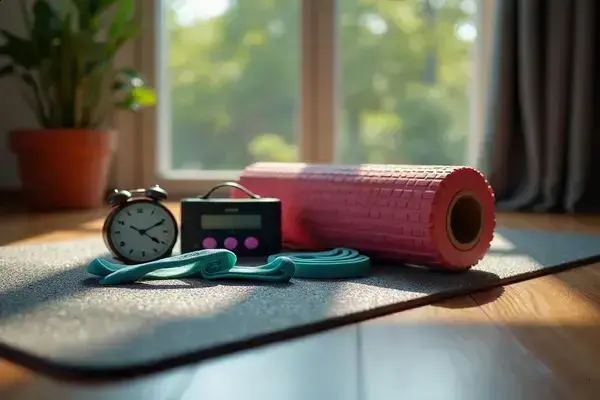
- Yoga mat or carpet: Gives grip and joint support during floor exercises—no need to buy a new one if you have a rug that won’t slip.
💡 Pro Tip: Try filling two empty milk jugs with water, sand, or rice for adjustable free weights. The Centers for Disease Control and Prevention confirm this is a safe, effective way to add resistance for curls and presses at home.
In practice: picture this scenario—a working parent, short on time, grabs two filled water bottles and a backpack. Ten minutes later, they’ve completed a mixed circuit with squats, chest presses, overhead lifts, and some core twists, all without stepping outside or spending a cent. It’s surprisingly effective and, in many cases, more sustainable than waiting for equipment at a crowded gym. Remember: consistency matters more than the tool you choose.
| Item | How to Use | Best For |
|---|---|---|
| Backpack | Fill with books for resistance | Squats, lunges, rows |
| Towel | Use as slider or for stretching | Core, flexibility |
| Chair | Step-ups, dips, split squats | Strength, balance |
But there’s one detail most owners completely overlook until it’s too late—using familiar household objects means you’ll never have an excuse to skip your routine because the “right equipment” isn’t available…
Designing A Home Workout Plan That Fits Your Life
How do you actually create a home workout plan that sticks—one that doesn’t collect dust on your fridge or fade after week two? The secret sits in the details: planning around your true schedule, what motivates you, and what you already have at home. It’s not just about exercises, but about making fitness a real, living part of your daily life.
- Audit Your Time: Block out your actual windows for exercise—early morning, lunch break, or right after work. Be honest with yourself about what you’ll stick with.
- List Your Goals: Want to improve strength, endurance, flexibility, or lose weight? Prioritize two main targets and design for those—too many goals dilute progress.
- Choose Your Moves: Pick 5-8 simple, functional exercises using bodyweight and any available equipment (like squats, push-ups, bent-over rows with water bottles, planks, step-ups on a chair, glute bridges).
- Mix It Up: Split your week: maybe three days of full body, two days focused on core or mobility. Use a printable planner to track.
- Schedule Rest and Recovery: Assign specific rest or active recovery days. Listen to your body—fatigue is feedback, not failure.
⚠️ Important Warning: Always consult a certified personal trainer or healthcare provider before starting a new fitness routine, especially if you have pre-existing medical conditions. According to Mayo Clinic guidelines, progress safely and avoid injury by starting slow and listening to your body.
In practice: a new remote worker wants to exercise before breakfast, three times a week. They block their calendar, set up their mat and bottles the night before, and use a printed template taped to the fridge. The plan evolves as fitness improves, but the routine builds consistency—turning motivation into habit.
| Day | Focus | Sample Exercises |
|---|---|---|
| Mon/Wed/Fri | Full Body Strength | Squats, Push-Ups, Rows, Glute Bridges |
| Tue/Thu | Core & Mobility | Planks, Side Bridges, Cat-Cow, Hip Flexor Stretch |
| Sat/Sun | Active Rest | Light Walk, Yoga Flow, Foam Rolling |
What actually works might surprise you—your most successful routine isn’t the hardest or longest, but the one you can do without breaking your stride…
How To Use And Track Your Printable Workout Plan
Ever printed a workout plan—only to forget where you placed it, or to give up on it after three days? You’re not alone. Making a printable plan work for you takes a bit more than hanging it on your fridge. It’s about practical, daily use and tracking real progress.
- Print Your Plan: Choose a template that covers the week and offers space for notes. Color helps highlight rest days, milestones, or tough sessions.
- Put It Where You’ll See It: Don’t bury it in a drawer. Tape it to your fridge, closet door, or bathroom mirror—any high-traffic spot in your home.
- Mark Every Session: After each workout, check the box, add reps/weight, or jot a quick emoji about how you felt. Those visual streaks keep motivation alive.
- Note Adjustments: If you tweak reps, swap exercises, or shorten/rest, record the actual changes. Over time, these details tell the real story of your progress.
- Review Weekly: Once a week, spend five minutes checking your progress. Celebrate wins and set one small goal for the coming week—maybe add 10 seconds to your plank or try one new move.
- Use colored pens or stickers for extra accountability—adults love sticker charts too.
- If your plan is digital (downloaded as a PDF), print it each Sunday and score through sessions as you go.
- Keep old printables in a visible folder; reviewing past plans builds confidence and shows how far you’ve come.
💡 Pro Tip: The National Strength and Conditioning Association finds that maintaining a simple paper log improves adherence and outcomes in home fitness plans by up to 30% compared to no tracking at all.
In practice: picture this scenario—a busy teacher prints her workout plan and tapes it on the fridge next to her family calendar. Each morning, she checks off her session before breakfast. By Friday, she’s hitting more reps, and her kids see the colorful chart filling up—instant motivation boost, no smartphone app required.
But there’s one detail most owners completely overlook until it’s too late… how you measure your own commitment often matters more than what you’re tracking in the first place…
Staying Motivated And Pushing Past The Home Workout Slump
You start strong—using your printable plan and flying through workouts for a week or two. But what do you do when your drive fizzles and your energy tanks? Every home exerciser faces this moment, where motivation slips and skipping a session sounds way too tempting.
- Switch things up: rotate new music playlists, try different workout formats, or experiment with time-of-day to re-ignite your energy.
- Celebrate micro-wins: don’t wait for a six-pack. Mark every great session, new move tried, or streak on your chart.
- Schedule “fun days”: let one workout week be outdoors, or add “challenge” days like stair sprints or backyard circuits—break the routine, keep the habit.
- Pair workouts with routines you already love—podcasts, audiobooks, or favorite shows add easy incentive for tough days.
💡 Pro Tip: Research from the American Psychological Association shows that creating small, ritualized pre-workout cues—like brewing coffee 15 minutes before or setting a single playlist—primes your brain for action and boosts follow-through by up to 20%.
In practice: picture this scenario—a home exerciser tapes their workout log beside the coffee pot. Each morning, the smell of fresh coffee signals time to move. Even on sleepy days, the association nudges them to the mat before their brain can argue. Over weeks, those built-in rituals become the backbone of consistency.
| Challenge | Solution | Motivation Hack |
|---|---|---|
| Boredom | Rotate routines weekly | Try new playlist or scenic route |
| Low Energy | Pick shorter workouts | Reward with a post-session treat |
| Plateau | Adjust reps or add equipment | Track new personal bests |
Once this is in place, the rest of the routine falls into place naturally. The right habits—set one by one—will keep you showing up, even when motivation comes and goes.
Your Fitness Routine Starts Here
If you take just one thing from this guide, let it be: consistency matters far more than perfect equipment or fancy apps. With your home workout plan printable free, you’ve learned how to make the most of what you have, build routines around real life, and stay motivated when things get tough.
Before, sticking to a workout plan at home might’ve felt overwhelming, confusing, or even impossible. Now you know it can be simple, flexible, and actually fun. Those small daily actions add up—step by step, you’re building a routine that finally fits your world.
What’s the first move you’re putting on your printable plan? Share it in the comments—let’s cheer each other on!

Jordan Blake Harrison is a fitness enthusiast and workout planner dedicated to helping everyday people build consistent exercise habits that actually last. With a passion for practical training plans, honest nutrition guidance, and printable fitness tools, Jordan built this blog to give real people everything they need to get fit and stay motivated — without the overwhelm.