Have you ever started a workout plan, only to find yourself tangled in complicated routines and fancy jargon by week two? It feels like every beginner’s guide assumes you already speak gym-fluently or have endless free time—trust me, most of us don’t, and it’s no wonder so many quit before real progress happens.
Here’s the thing: doing nothing or overcomplicating your start can mean months of wasted effort and zero visible results (not to mention racking up frustration and self-doubt along the way). That mental weight gets heavier every week you don’t see a path forward you can actually stick with.
By the time you reach the end, you’ll have a practical, strength training plan beginners printable that skips all the fluff. Expect real advice, clear steps, and a routine you can print and use—so you’ll finally see muscle gains without second-guessing yourself. Ready to trade confusion for confidence? Let’s get started.
Why Beginners Get Stuck With Strength Training Plans
Ever wonder why so many enthusiastic beginners stall out after just a few weeks of lifting? The truth is, most strength training plans seem simple but hide a minefield of obstacles—confusing jargon, unrealistic expectations, and information overload. Suddenly, instead of feeling stronger, you just feel lost.
Here’s the thing: even with all the free routines online, not knowing where to start or what actually matters is a recipe for giving up. You might spend hours choosing between “full-body” versus “split” programs, or try copying the choices of lifelong athletes—then get frustrated when results don’t come quickly. And that’s when motivation tanks.
💡 Pro Tip: According to the American College of Sports Medicine, sticking with a beginner-friendly, progressive overload plan (not just random workouts) triples the odds you’ll see measurable muscle growth in the first three months.
In practice: picture this scenario—Sam, eager to get fit for summer, downloads three different apps and prints five sample routines. He hits the gym pumped up… but the exercises listed use equipment he’s never seen, with terms like “superset” or “deload” that might as well be another language. By week three, his sheet is gathering dust and Sam’s wondering if he’s just not “cut out” for strength training.
- Information Overload: Too many plans, too little guidance for true beginners.
- Poorly Defined Goals: Without clear milestones, progress disappears into day-to-day noise.
- Technique Anxiety: Worrying about doing moves “wrong” keeps people from even starting.
- Lack of Support: No feedback or encouragement can make sticking to a plan feel isolating.
| Common Barrier | Typical Result | Recommended Fix |
|---|---|---|
| Overcomplicated Plans | Quit after 2-4 weeks | Use simplified, printable templates |
| Unclear Progressions | Plateau early, lose motivation | Track small wins weekly |
| Confusing Gym Lingo | Skip exercises, miss form cues | Stick with clear, visual instruction |
And honestly? The best programs for newbies keep it dead simple, emphasize showing up over perfection, and remove the guesswork entirely—just like the guidelines from the CDC suggest for healthy habit formation.
But there’s one detail most beginners completely overlook until it’s too late…
The Core Principles You Actually Need To Start
What really matters when you’re just starting with strength training? Contrary to what endless YouTube rabbit holes may say, you don’t need a perfect diet, a six-day split, or expensive equipment. Let’s get brutally honest—the basics you build now will carry your progress far longer than advanced protocols ever could.
- Progressive Overload: This simply means, little by little, you increase challenge—either with more resistance, more reps, or better form. Tiny steps win the race.
- Consistency: The American Council on Exercise emphasizes showing up two to three times per week is far more effective than cramming five workouts into one frantic week and quitting.
- Compound Movements: Think moves like squats, push-ups, or rows—exercises that hit multiple muscle groups at once. More bang for your buck, less boredom too.
- Good Form Over Heavy Weights: Using a manageable weight with solid technique helps prevent injuries and burns out exactly the “target” muscles you want to build.
💡 Pro Tip: Start with bodyweight or light dumbbells. When a set feels too easy, add one extra rep or a small weight increase next time. According to the National Strength and Conditioning Association, this is hands-down the safest, most effective path for beginners.
In practice: imagine Jamie, who’s never trained before. She picks three basic moves—bodyweight squats, incline push-ups on the sofa, and bent-over rows with grocery bags. Week one, she does 2 sets of 8 reps each. Next week? She manages a third set. No gym membership, no complex gear—just a steady, gentle climb. And yes, it works.
| Principle | Why It Matters | Beginner Action |
|---|---|---|
| Progressive Overload | Drives muscle adaptation | Add 1 rep or small weight weekly |
| Compound Lifts | Save time, burn more calories | Prioritize squats, pushes, rows |
| Consistency | Forms lasting habits | Schedule 3 fixed weekly sessions |
Many plans drown you in detail, but at the end of the day, these core principles lay the groundwork for every future gain. What actually works might surprise you…
Step-By-Step Weekly Routine Anyone Can Follow
How do you turn those core strength principles into an actual routine that fits your life? You’d be surprised—getting started doesn’t require hours in the gym or a professional trainer hovering over your every squat. All it really takes is a focused, flexible schedule you can actually stick to without feeling overwhelmed.
- Set Your Foundation: Pick three non-negotiable days—say, Monday, Wednesday, and Friday. Block just 30-40 minutes for each session, no multitasking or excuses.
- Warm Up Smart: Spend 5 minutes with brisk walking, jumping jacks, or gentle dynamic stretches—get the blood pumping and joints moving, no fancy gear needed.
- Choose Your Core Moves: Each session, rotate through 3 compound exercises:
- Squats (bodyweight or with a dumbbell)
- Push-Ups (inclined, regular or from the knees)
- Bent-Over Rows (dumbbell, resistance band, or household object)
- Stick To Simple Sets: For each move, do 2-3 sets of 8-12 reps. Prioritize good form over speed—rest 60 seconds between sets.
- Cool Down, Then Reflect: Stretch tight muscles for 5 minutes. Jot down what felt easy or tough in a workout log so you can notice progress.
⚠️ Important Warning: If you’re new to exercise, have a medical condition, or are unsure about technique, consult a certified personal trainer or your doctor before making big changes. The Mayo Clinic strongly recommends personalized advice for safety.
Picture this scenario: Ari, a total beginner with no gym membership, dedicates three evenings a week to working out in her living room. She props her tablet with a timer, does squats holding a sack of rice, and rows with a resistance band she found online for under $10. After four weeks, she’s amazed to see her planks last longer and those stairs at work don’t leave her breathless.
| Day | Main Exercises | Goal |
|---|---|---|
| Monday | Squats, Push-Ups, Bent-Over Rows | Full-Body Strength, Technique |
| Wednesday | Squats, Push-Ups, Bent-Over Rows | Increase Reps or Resistance |
| Friday | Squats, Push-Ups, Bent-Over Rows | Test Endurance, Note Progress |
And this is exactly where most people make the most common mistake…
What Equipment And Space You Really Need At Home Or Gym
Ever feel like you can’t get started because you don’t have the ‘right’ gear or a flashy gym setup? Here’s the thing—strength training for beginners doesn’t demand a massive investment or a dedicated studio. In fact, you can see incredible results with just a few key items and minimal space.
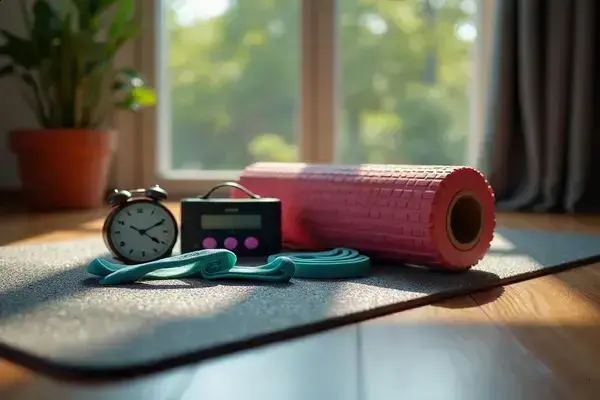
- Essentials: A pair of adjustable dumbbells (or fixed weights in the 5–20 lb range), a durable resistance band, and a non-slip exercise mat. That’s it. These three unlock almost every major movement pattern for total-body workouts.
- Nice-to-Haves: If your budget allows, a stable workout bench, a pull-up bar, or a kettlebell adds variety down the road—no pressure to get these when you first start.
- No Equipment? Bodyweight moves like push-ups, squats, and planks are surprisingly effective, especially if you’re training in a small space.
💡 Pro Tip: According to the National Academy of Sports Medicine, an area just 6×6 feet (about the size of a yoga mat) is enough for nearly every foundational strength exercise.
| Setting | Minimum Gear Needed | Space Required |
|---|---|---|
| Home (Apartment) | Mat, band, 1 set dumbbells | 6×6 feet |
| Home (Garage/Basement) | Add bench, pull-up bar | 10×10 feet |
| Commercial Gym | Access to full range of weights | Full gym zone |
In practice: picture this scenario—Mia lives in a small studio with no gear at all. Her first month of training? She used a towel for her mat and water bottles as weights before upgrading to a basic set online. No excuses, no wasted space, and she still built real muscle.
Don’t get paralyzed by endless shopping lists—start with what you have, then upgrade as you grow. And this is exactly where most people make the most common mistake…
Downloadable Printable Strength Training Plan For Easy Use
What if all your hard work and planning could be captured in a single page you actually want to use? That’s the promise of a well-designed, printable strength training plan—it’s not just a checklist, but a living roadmap you can tweak and carry anywhere. No more flipping between tabs, losing your place, or wondering what’s next.
- What’s Included? Pre-filled spaces for exercise names, sets, reps, weight or resistance, rest time, and notes. A weekly schedule grid with built-in progress columns.
- How To Use: Print out enough sheets for a month. Each session, fill in your data by hand (or pencil)—this act of writing seals the routine in your memory way better than any app notification.
- Update Frequency: Each week, scan for small wins—can you add a rep or try a tad more weight? Jot down what felt easy, what needs work, and update your next plan accordingly.
💡 Pro Tip: The Cleveland Clinic recommends keeping your log visible—in your gym bag, on the fridge, or wherever you’ll see it before every session. Visibility boosts habit consistency.
In practice: picture this scenario—a busy parent keeps their printable plan clipped to their fridge. Before every workout, they scan yesterday’s notes, circle one tiny goal, and head straight to their exercise mat. No fuss, no endless scrolling, just genuine progress reflecting back.
| Section | Purpose | Customization |
|---|---|---|
| Exercise Blocks | Track sets, reps, weight | Add new moves as skills grow |
| Weekly Goal Area | Focus on 1-2 progress targets | Change goal with each cycle |
| Notes/Reflections | Identify challenges & wins | Personal reminders, encouragement |
The right habits in place now make everything easier from here.
Strength Starts Simple and Sticks
If you take just one thing from this guide, let it be: progress in strength training is about simplicity, not complication. Your strength training plan for beginners printable gives you a true roadmap, realistic space and gear needs, and a step-by-step routine to follow. Keep it simple — and you’ll actually see results.
Before, you might’ve felt lost, overwhelmed, or thought you needed a fancy gym. Now, you can confidently train at home or in any space, tracking your reps and celebrating small wins. It’s not about perfection — just showing up, one workout at a time. That’s where real strength grows.
What part of this printable plan are you most excited to try, or where do you need more help? Jump into the comments and share your next step – we’re in this together!

Jordan Blake Harrison is a fitness enthusiast and workout planner dedicated to helping everyday people build consistent exercise habits that actually last. With a passion for practical training plans, honest nutrition guidance, and printable fitness tools, Jordan built this blog to give real people everything they need to get fit and stay motivated — without the overwhelm.