Picture this: you walk into the gym ready to crush your workout, but your legs feel heavy just looking at the squat rack. Suddenly, leg day doesn’t sound so appealing—been there, haven’t you?
The truth is, skipping or winging your lower body workouts holds back more than just muscle growth. It can mess with your strength, endurance, and even your confidence. Nobody likes feeling stuck, cycling through the same tired routine with no real progress.
Stick with me, and by the time you finish reading, you’ll have a full playbook of leg day exercises gym plans that actually work—plus tricks to sidestep the traps that trip up most people. Ready to make this your strongest lower body workout yet?
Why Leg Day Matters More Than You Think
Ever wondered why leg day gets all the hype—while many still try to dodge it? The truth is, your lower body isn’t just a set of big muscles. It’s the foundation for your entire body’s power, balance, and even posture. Skip those sessions too often, and sooner or later you’re likely to feel the effects in everything from your squat strength to your energy outside the gym.
Here’s the thing: building strong legs pays off way beyond looks. Powerful quads, glutes, and hamstrings can boost your metabolic rate, help support fat loss goals, and keep your joints healthy as you age. According to the American Council on Exercise (ACE), regular lower-body strength training can also reduce common injuries and improve overall athletic performance—whether you play sports, chase your kids, or just want to move pain-free at work.
💡 Pro Tip: Most people only track upper body gains and ignore the numbers on their leg workouts. Keep a dedicated log for your squats, lunges, and deadlift progress to stay motivated. You’ll spot plateaus faster and know exactly when to increase the challenge.
Picture this scenario: You’ve been hitting the gym for months, cranking out bench presses and curls, but your back aches whenever you stand for long or hike a few flights of stairs. Turns out, neglecting leg day isn’t just a fitness faux pas—it can throw off full-body alignment, leaving you less stable and more prone to strains.
| Benefit | Impact | Who Sees the Most Benefit? |
|---|---|---|
| Increased Muscle Mass | Burns more calories, easier weight management | Anyone with weight loss or muscle gain goals |
| Improved Joint Stability | Protects knees, hips, ankles from injuries | Athletes, older adults, physical job roles |
| Higher Functional Strength | Makes everyday tasks (lifting, climbing, running) easier | Everyone—from active parents to casual gym-goers |
And honestly? Most people become lifelong leg day fans the moment they realize it powers up every other movement—inside and outside the gym. But there’s one detail most owners completely overlook until it’s too late…
Essential Gym Equipment For Lower Body Gains
Working your lower body at the gym can feel overwhelming if you’re not sure which equipment actually delivers results. Here’s the thing: the right tools can help you build strength, improve stability, and unlock muscle growth—fast. But you don’t need every machine in the weight room. Let’s break down what matters most.
- Barbell and Weight Plates: A staple for squats, deadlifts, and lunges—heavy compound moves that engage multiple muscle groups.
- Squat Rack or Power Cage: Provides safety for loading heavier weights while training alone. Adjustable heights for squats, rack pulls, and presses.
- Leg Press Machine: Targets quads, glutes, and hamstrings without putting stress on your lower back. Keeps your movement controlled and focused.
- Romanian Deadlift Bar: Perfect for hamstrings and glute activation, with a solid grip and versatile bar path.
- Resistance Bands: Lightweight, portable, and fantastic for adding targeted tension or activating muscles during warm-ups and hip thrusts.
- Adjustable Bench: For Bulgarian split squats, step-ups, glute bridges, and countless single-leg exercises. Flexibility to hit multiple angles.
💡 Pro Tip: Start every session by checking the equipment’s integrity—frayed cables or loose bolts on machines can lead to serious injuries. According to the National Strength and Conditioning Association (NSCA), routine safety checks are essential for preventing gym accidents.
In practice: picture this scenario—a gym-goer tries to build bigger legs but only uses the leg extension machine out of habit. Weeks pass, progress stalls, and knee soreness appears. Only after adding compound barbell lifts and resistance bands does true progress (and relief) arrive.
| Equipment | Best For | Key Benefit |
|---|---|---|
| Barbell + Squat Rack | Free-weight compound lifts | Full-body strength, versatility |
| Leg Press Machine | Controlled quad/glute focus | Less strain on lower back |
| Resistance Bands | Glute activation, warm-ups | Joint-friendly, portable |
What actually works might surprise you…
Best Compound And Isolation Exercises For Legs
Which leg exercises give you the biggest return on your sweat investment? The answer depends on mixing compound and isolation moves—each has a distinct job. Compound exercises activate multiple muscle groups (think squats, deadlifts), while isolation moves laser in on a single area (like leg curls or calf raises). So, if you want strong, balanced legs and max results, you’ll need both on your roster.
- Barbell Back Squat: Hits glutes, quads, hamstrings, and even core. The undisputed king for overall leg growth and power.
- Romanian Deadlift: Excellent for stretching and strengthening hamstrings and glutes. Keeps your lower back safe when done with good form.
- Leg Press: Allows heavy loading with stable support—great for targeting quads, glutes, and even calves with different foot placements.
- Lunges (Dumbbell or Barbell): Challenges both legs independently, trains balance, and blasts glutes as well as quads.
- Leg Extension: Isolates quads—helpful for sculpting front thigh definition and rehab work.
- Seated or Lying Leg Curl: Targets the hamstrings, supports knee joint health, and adds important flexion strength.
- Standing Calf Raise: Focuses entirely on the gastrocnemius and soleus for stronger, better-shaped lower legs.
💡 Pro Tip: Combine compound lifts with isolation moves in the same session, starting with the big multi-joint exercises. The American College of Sports Medicine recommends performing compound lifts early while energy is highest—for better form and results.
In practice: imagine you’re working through a leg workout—heavy squats first, then lunges, and wrap up with calf raises and leg extensions. You’ll notice strength gains, greater muscle activation, and fewer weak spots over time. It’s not about picking one “best”—it’s about a smart sequence tailored to your goals and ability.
| Exercise | Type | Main Benefit |
|---|---|---|
| Back Squat | Compound | Total leg and core power |
| Leg Curl | Isolation | Hamstring strengthening |
| Calf Raise | Isolation | Lower leg size & balance |
And this is exactly where most people make the most common mistake…
How To Structure An Effective Leg Day Routine
How do you squeeze the most out of leg day—without burning out, stalling your progress, or risking injury? The key is following a balanced, science-backed structure that lets you build strength, power, and muscle, all in one session. And trust me, it’s a lot more rewarding than just hopping between your favorite machines.
- Warm-Up (5–10 Minutes): Start with light cardio (rowing, cycling, treadmill walk) to get blood flowing and elevate core temperature. Follow with dynamic stretches like leg swings, lunges, and hip circles to activate your hips, glutes, and quads.
- Big Compound Lift: Tackle your toughest exercise first when energy’s highest. This is usually a squat or deadlift variation—pick what matches your current strength and comfort level.
- Secondary Compound Movement: Add a second big move with a different focus, like Romanian deadlifts (for hamstrings) or leg press (for quads/glutes).
- Unilateral or Stability Work: Do split squats, Bulgarian squats, or walking lunges—these single-leg movements catch imbalances and build core stability.
- Isolation Finisher: Target weak points or shape muscles with exercises like leg extensions, hamstring curls, or calf raises, using moderate weight and higher reps.
- Cooldown and Stretching: Wrap up with 5–10 minutes of gentle cycling or walking, then static stretches for your quads, hamstrings, calves, and glutes. This aids recovery—and yes, helps with soreness.
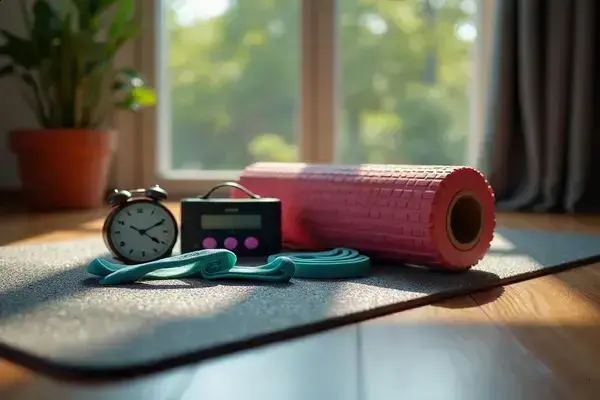
- Timer or watch (to pace sets and rest)
- Barbell or dumbbells (for main lifts)
- Bench, resistance bands, and mat
- Foam roller for post-workout recovery
⚠️ Important Warning: Always adjust the load and intensity based on experience and energy on the day. The American Council on Exercise recommends at least 48 hours’ rest between heavy leg days—and if you have joint or back issues, consult a qualified physical therapist or physician before starting a new regimen.
In practice: imagine Sarah, back in her local gym with a new routine to follow. She starts with deep bodyweight squats, eases into barbell lifts, then hits step-ups for balance, and finishes every session with focused calf work. Her stamina—and confidence—grows each week, and her DOMS (delayed onset muscle soreness) finally becomes manageable.
What actually works might surprise you…
Common Mistakes That Sabotage Results—And How To Fix Them
It’s easy to pour your heart (and sweat) into leg day, then wonder why progress flatlines or pain creeps in. The truth is, most gym-goers repeat a handful of classic mistakes—sometimes for years—without realizing it’s killing their gains and risking their joints.
- Skipping the Warm-Up: Diving into heavy squats or deadlifts with cold muscles is a recipe for soreness or worse, injury. That five-minute dynamic warm-up? It’s non-negotiable for performance and protection.
- Partial Range of Motion: Cutting reps short—half squats, incomplete leg presses—slows down muscle growth and can set up imbalances. If you can’t get full depth, lower the weight and build gradually.
- Poor Form Under Heavy Loads: Chasing numbers with sloppy squats or wobbly lunges isn’t brag-worthy, it’s dangerous. Prioritize technique over ego every single session.
- Neglecting Unilateral Work: Relying only on two-legged lifts allows weaknesses to go unchecked. Single-leg moves (split squats, lunges) play a key role in building functional strength—and keeping you symmetrical.
- No Progression Plan: Doing the same reps and sets week after week? Your body adapts fast. Either bump the resistance, change the exercise order, or adjust rep schemes to keep things growing.
| Mistake | Consequence | How To Fix |
|---|---|---|
| Skipping Warm-Up | Joint and muscle injuries | 5-10 min dynamic warm-up |
| Partial Reps | Imbalanced leg development | Drop weight, use full range |
| Skipping Unilateral Work | Poor balance, hidden imbalances | Include lunges or split squats |
💡 Pro Tip: According to the National Academy of Sports Medicine, slowing down your reps—even by just a second or two—can dramatically improve both technique and muscle activation. Focus on every rep, not just the end goal.
In practice: someone rushes straight to hefty squats after sitting all day, skips lunges entirely, and uses the leg press just to max the stack. A few months later? Knee pain, lopsided strength, and discouragingly slow results. Those who take the time to correct just one or two of these habits often see progress—and comfort—skyrocket.
The right habits in place now make everything easier from here.
Your Strongest Leg Day Yet
If you take just one thing from this guide, let it be: real results come from consistent, balanced leg day exercises gym routines—mixing compound and isolation moves, using the right equipment, and paying attention to form matters a lot more than chasing heavy numbers. Skipping any of these steps cheats you out of progress and confidence.
Maybe leg day felt confusing, intimidating, or even frustrating before. Now you know how to structure your workout, avoid classic mistakes, and use each tool with purpose. Your next session can be focused, effective, and pain-free. Progress doesn’t have to be complicated—it just needs to be built on good habits, week after week. You’re already ahead of most people.
Which change are you excited to try first—new gear, a smarter routine, or fixing old mistakes? Share your game plan in the comments and let’s see those results build up!
Jordan Blake Harrison is a fitness enthusiast and workout planner dedicated to helping everyday people build consistent exercise habits that actually last. With a passion for practical training plans, honest nutrition guidance, and printable fitness tools, Jordan built this blog to give real people everything they need to get fit and stay motivated — without the overwhelm.